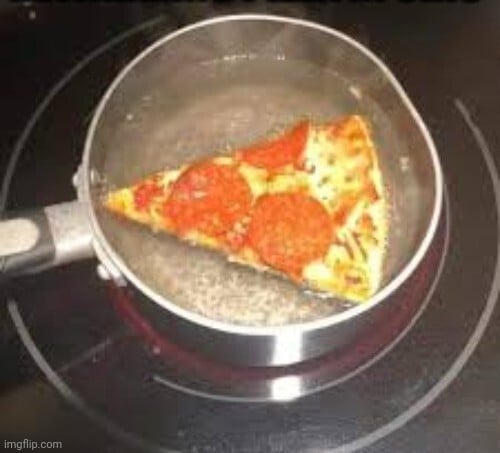
Only if you are a level 99 necrobaker
Despite the doubts on here, theres actually a bakery that grinds down day old bread and reuses it on their next day batch. They say it gives it a good taste. Atleast according to a video i saw and logically it makes sense.
The idea is to use some of it while using flour rather than replacing flour otherwise you will make condensed hard bread.
My local bakery does this with sourdough. The recycled sourdough loaves are SUPER tangy, like tang-for-days levels. It’s great.
That sounds awful. I think tangy sourdough bread is disgusting (which is one of the reasons I hated living in eastern Germany).
The taste is good. Almost as if you baked it over a wood fire.
I make bread several times per month. I have probably “recycled” around 20.
Not really, no - entropy is one-way at the macro scale.
The flour absorbed water, and combined with kneading, produced gluten (and was baked, causing more chemical changes).
Grinding it all up wouldn’t reverse that process - it would just be ground up bread.
Breadcrumbs. Panko if fortunate.
Or croutons.
With enough energy you certainly could, even if that meant breaking everything down to their constituent parts chemically and doing stuff like reconstructing proteins from amino acids. This isn’t reversing entropy but you could get back to the original ingredients, with some Ship of Theseus stuff happening with the matter involved.
There is probably a law of diminishing returns in here because bread contains other ingredients as well (salt, yeast, etc.) and after a while the chemistry of baking will be out of whack.
There is something similar but not quite. Masa is made from nixtamalized corn, but the process to make fresh masa means pulverizing the moist kernels into a dough. Then, to store for later use, the dough can be dried and ground into a flour: masa harina (literally “dough flour”).
I’ve heard of some bakery somewhere doing “recycled bread”, where they supposedly take the leftover bread that didn’t sell that day, dry it out, grind it up, and mix it with fresh flour to make new bread, but I don’t know for sure if the story is real.
If a real thing in Mexican bakeries. They’ll take all the stale pan dulce, waiting till they become very dry, and grind them into a flour, or fine chunks depending on the bakery, and mix them in with fresh dough to create a cinnamon flavor pastry called a “piedra”, or rock in English. They have the texture of a scone. They’re pretty good. my dad loves them.

TIL
Its a real thing, there’s a term for it if i can find it.
Edit; Pate Fermentee, or “old dough”, setting aside a hunk of dough from todays batch to mix into tomorrows for extra flavor
Theres also a method called a “soaker”, using stale bread in water, breaking it down, and remixing it into a new dough
That’s somewhat different. They aren’t taking stale bread and reusing it to make new bread, but rather a portion of the raw dough from a previous batch is saved and added to fresh dough. It’s meant to add a bit of fermented flavor, without quite being a sourdough. It’s more in line with preferments like poolish and biga.
It’s common in Germany
Actually I know somebody who makes cake out of it.
Not without other ingredients. The flour has undergone an irreversible change.
Binging with babyish on YouTube tried this not long ago when trying to make cheeseburger pizza or something. It wasn’t great
During COVID lockdown I had plenty of yeast but very little flour, so I bulked it out with about half Matzo meal, which isn’t breadcrumbs but the flour has been cooked. It wasn’t great, but it loafed enough to slice and make sandwiches or toast.
Yeah but the texture would probably suck
Croutons are cooked twice with no problems. Once the bread gets stale it probably grinds easily.
The gluten does not come back if u pulverize it. You’ll likely end up someone terrible.
Edit: I sometimes forget to proofread “some things”
They might end up making a pretty crappy loaf of bread but it’s a bit much to imply they’ll become a bad person because of this.
I’m going to edit but not change the context cause this made me smile.
You made shitty bread, when you could have made good bread. Straight to Jail.
deleted by creator
I haven’t tried it. I can only assume you won’t get much gluten development. It might be more crumbly and dense, like cornbread, I would think.
Yes and no.
Once baked the gluten, starches and really most of the things in the bread change irreversably.
If you were to make bread, dry it, grind it down to a flour, and try to use that to make the exact same bread it will not work, at best you will get a very dense clump, at worst it will just crumble back to dust.
But, ask the jewish people about passover and you will find out that cooked bread grinded back into flour can be used in many dishes (Matza flour) Some of which are a different kind of bread, but they do need a new binder since the gluten is denatured, so usually they use eggs.
For example matza balls can be considered a type of twice cooked bread, once in the oven, then grounded to flour, and then cooked again in water.