

- cross-posted to:
- ich_iel@feddit.org
- cross-posted to:
- ich_iel@feddit.org
You must log in or # to comment.
This is so painfully close to being Loss. There’s got to be a way to juggle those squares around just right.
is this Das?
deleted by creator
deleted by creator
deleted by creator
Is this Verlust?
Fuck gender and fuck german for letting “the” get THIS fucking out of control.
I studied this fucker for 5 years in secondary school, got a B , but fuck it.
I’m learning/speaking Spanish now, it’s still got gender and el/la/al but it’s not this bad.
My first language of Turkish doesn’t even have “the” for fucks sake.
Spanish is a rather easy language
German on the other hand not so much. On the other hand, it’s usually very precise and information-dense, which is reflected in how fast it rather slow it’s spoken, especially compared to Spanish.
Talking speed differs greatly by region though. Slowest speakers are probably Swiss and fastest being citizens of Frankfurt.
Maybe you know it but if not read Mark Twain’s Essay “The Aweful German Language”. It’s a fantastic and bellyachingly funny thing to read. I am a native speaker and have to admit Mark makes so many brilliant points.
Ist das Verlust?
Babe wake up. The German grammar political compass just dropped.
I’d like to start a petition to replace all these bad boys with “deez.” For example: Deez Frau ist mit deez Hut…uhhhh…getanzt.
6 articles?
amateurs…
meanwhile the polish words for “this” and “that”:

Same across other Slavic languages
You think this is bad you should see a chart that explains the prepositions across the cases… Jfc
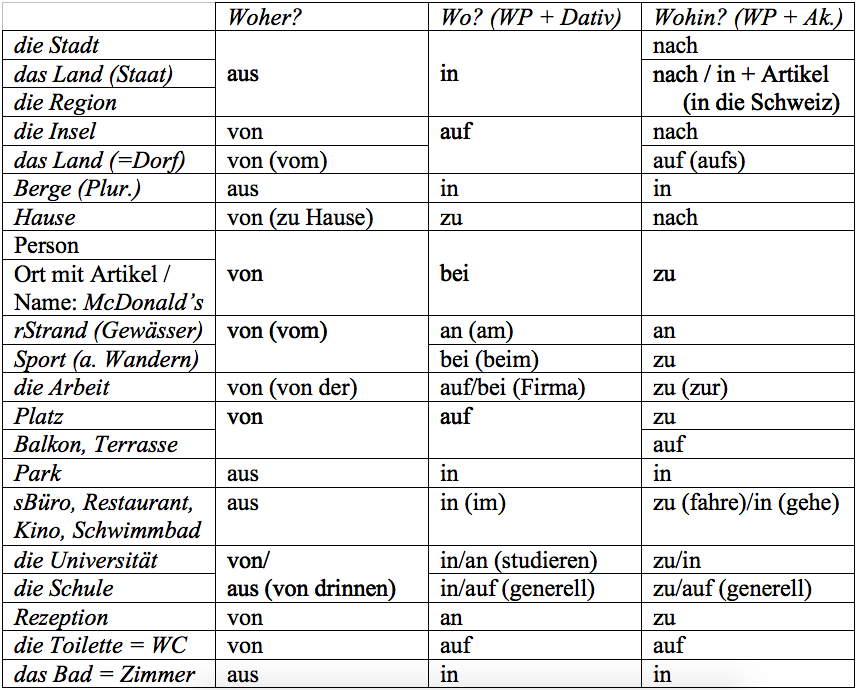
This actually makes more sense than the arbitrary grammatical genders. (Sure, english has it simpler with, “from where”, “where” and “where to”)
Until you introduce whom (and, occasionally, whose) and native speakers’ brains explode. It’s soooo easy: Whose brain was exploded by whom? His brain was exploded by her, not He brain was exploded by she. Native English speakers do understand cases, they just don’t know that they understand.
Yup, I’m a native English speaker who teaches German to mostly native English speakers, and it’s always a fun moment when someone in class realizes that we have cases in English, too (don’t worry, I do tell them, if nobody speaks up, I just give them the chance to figure it out themselves first).
Thither and thence/hither and hence/whither and whence are also counterparts to there/here/where, for older and/or more literary English
I’m a nonnative German teacher and holy fuck is this helpful. I learned each of these separately and at different times with great effort, but I will be sharing this with my students, because it’s way easier to remember with this visualization. Thank you!!
English: We have one definitive article: “The”.
Me: OK, that’s nice and simple.
Scots Gaelic: Our’s is a little more complicated. We have “An”, which becomes “Am” for words beginning with B and P, for words starting with an h as the second letter (Th, Bh, Mh…) we use "A’ ", and for plurals we “na”, oh and if the first word in a word is a vowel, you slap “h-” onto it.
Me: OK, a we bit more complex but I can vibe with it, German what’s your Definitive articles?
German:
and if the first word in a word is a vowel
Damn, that sounds a bit complex /j (Thanks for the insight on how Gaelic definitive articles work btw)
That’s actually helpful
Though it’d be maybe even more helpful if you’re and columns were named; from my understanding, the columns are “male | female | neuter | plural” and the rows “Nominativ | Akkusativ | Dativ | Genitiv”
They are, it’s just transparent thus you get black on lemmy background dark grey.
Haha ok, thanks, I had no idea
I’m das/das
in order of masculine, feminine, neuter, plural
- nominative: der, die, das, die
- accusative: den, die, das, die
- dative: dem, der, dem, den
- genititive: des, der, des, der
which becomes:
- RESE
- NESE
- MRMN
- SRSR
in high school I pronounced this mnemonic as:
- resee
- nesee
- Mormon
- sir sir
My teacher didn’t like the “Mormon” bit, he wanted me to say “merman” but I found it easier to remember “Mormon” and his discomfort only made it stick better, lol.
This is exactly how I learned it as well, except I did Mermen instead of Mormon.
yes, I think “merman” is standard, lol - I was a silly teenager
The Bart, The!
No one who speaks German could be an evil man!
akkusativ my beloved <3
lossですか?
$5 says I’ll forget again in ten minutes.