As someone who lived in the UK, the British one is far too chunky, especially in an age where most devices don’t use the mandatory earth pin (which is mechanically necessary to open the shutters in the socket). The one place it has an advantage over Europlug is in aeroplane seat sockets and such, where it stays in more firmly.
Having said that, the Swiss and Brazilian ones manage to get earthed connections into a slender footprint (the Swiss is compatible with unearthed Europlug, not sure about the Brazilian though it may be smaller). Apparently the Brazilian socket was proposed as an international standard by the IEC, though only Brazil adopted it.
Interesting. How far along is South Africa’s adoption of it? Are they appearing in newly built houses or on appliances? And how are they handling the transition?
If 2-pin Europlugs won’t fit into a Type N, Europe may be better off in adopting the Swiss variant (which they do fit).
South Africa used to use a Mixture of M and C, and still mostly do.
But since 2018 building regulations require new houses to have at least one Type N plug installed.
Adoption is slow, but N being compatible with C will hopefully speed things along.


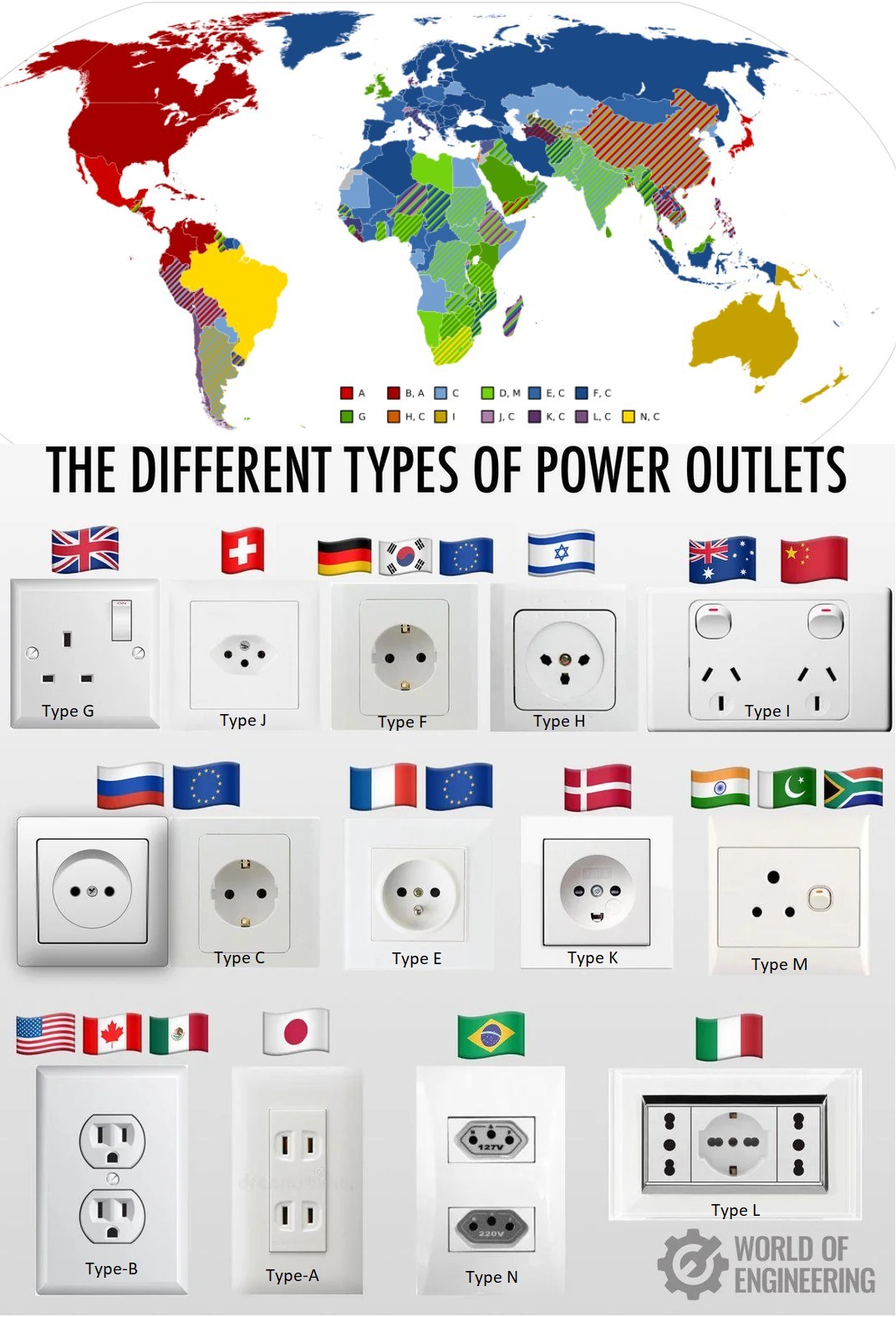
As someone who lived in the UK, the British one is far too chunky, especially in an age where most devices don’t use the mandatory earth pin (which is mechanically necessary to open the shutters in the socket). The one place it has an advantage over Europlug is in aeroplane seat sockets and such, where it stays in more firmly.
Having said that, the Swiss and Brazilian ones manage to get earthed connections into a slender footprint (the Swiss is compatible with unearthed Europlug, not sure about the Brazilian though it may be smaller). Apparently the Brazilian socket was proposed as an international standard by the IEC, though only Brazil adopted it.
South Africa is also slowly adopting Type-N.
Europe was supposed to, but abandoned the idea
Interesting. How far along is South Africa’s adoption of it? Are they appearing in newly built houses or on appliances? And how are they handling the transition?
If 2-pin Europlugs won’t fit into a Type N, Europe may be better off in adopting the Swiss variant (which they do fit).
South Africa used to use a Mixture of M and C, and still mostly do.
But since 2018 building regulations require new houses to have at least one Type N plug installed. Adoption is slow, but N being compatible with C will hopefully speed things along.
Brazil just set a date limit after which no electrical equipment was allowed to be sold with non standard plugs. Eventually it all worked itself out.
Type N socket accepts type C plugs. And is clearly the superior choice. The IEC doesn’t fuck around.