
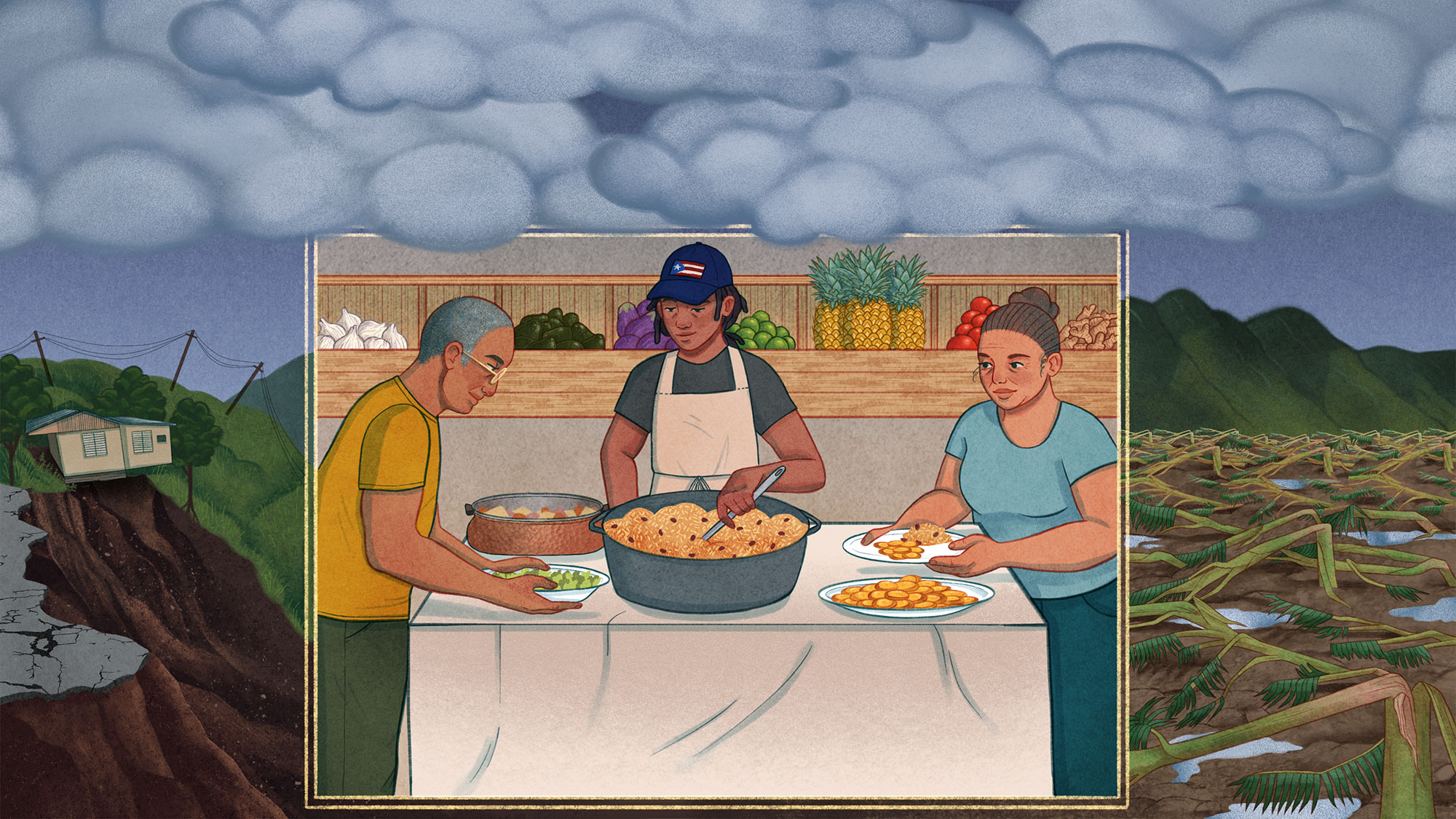
In the wake of Maria, many residents of Puerto Rico, especially those working to improve the archipelago’s local food system, began to think about hurricane preparedness differently. Because they weren’t able to rely on federal assistance, they decided to build their own prototypes of resilience, which didn’t just set them up to be ready for the next storm, but also set them up to live better everyday lives.
Cooperatives, gardens, and school-based agricultural programs emerged to fill the gaps left by the government. Barter networks and local farmers markets have become increasingly popular. Mutual-aid kitchens and community-led supermarkets have also expanded their work, ramping up donations, surplus food, and partnerships with nearby producers.
These projects aren’t just temporary disaster responses. They are models of long-term resilience and food independence. They are living blueprints of what food sovereignty could look like in Puerto Rico — and elsewhere.