

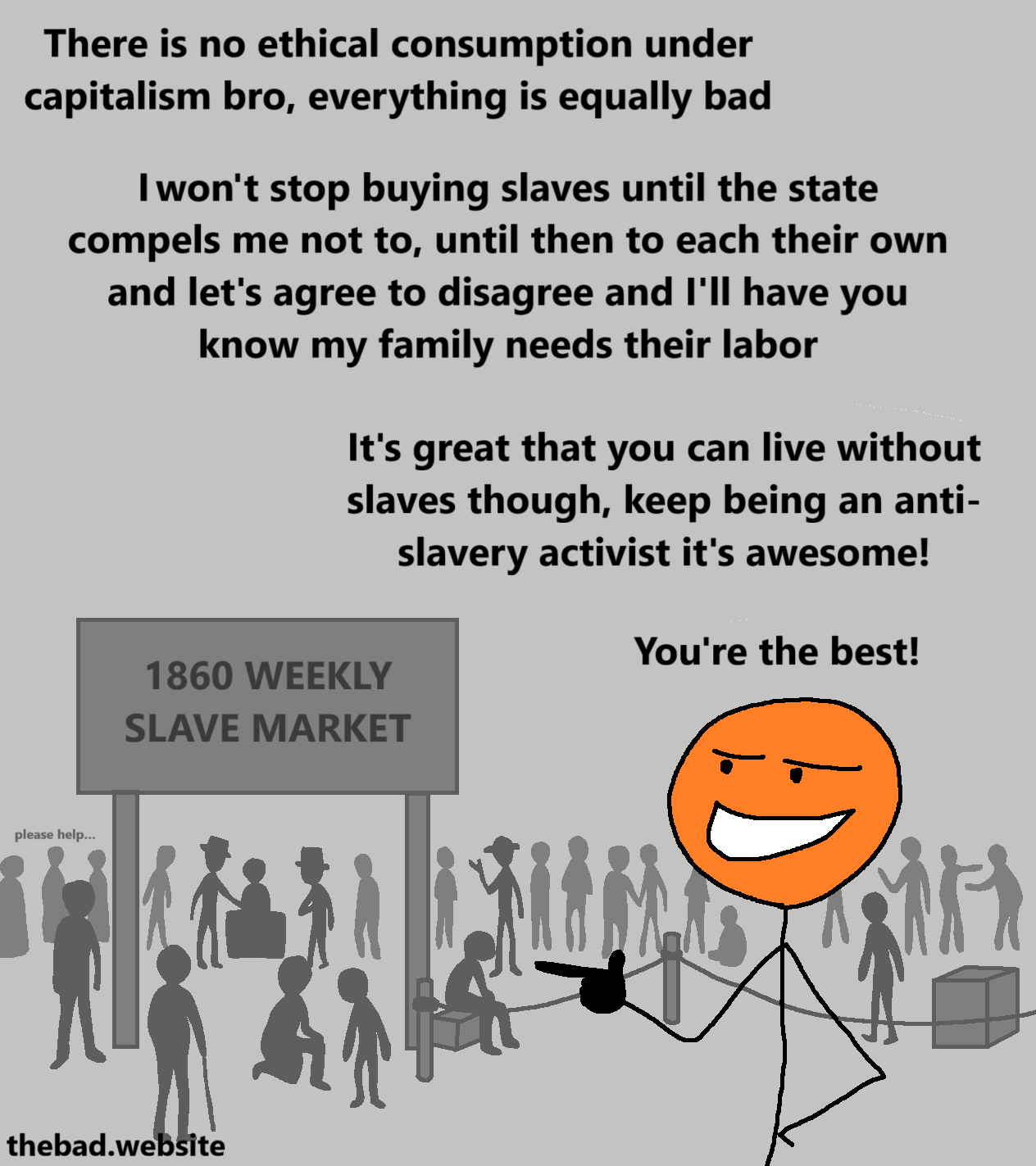
[orange character is smiling smugly, doing a finger gun, in front of the “1860 WEEKLY SLAVE MARKET” in which a crowd of people are browsing slaves, while some slaves ask “please help…”]
There is no ethical consumption under capitalism bro, everything is equally bad
I won’t stop buying slaves until the state compels me not to, until then to each their own and let’s agree to disagree and I’ll have you know my family needs their labor
It’s great that you can live without slaves though, keep being an anti-slavery activist it’s awesome!
You’re the best!
This wasn’t intended as criticism of “no ethical consumption”, but rather as satire of people who misunderstand the concept and think “no ethical consumption” is a moral shield that acts as a permission slip to completely stop caring about ethics and indulge in the vilest, least ethical consumption possible. Who cares if it was made with slave labor, everything is made with slave labor amirite?
Sure, except a part of the critique is an acknowledgement that exploitation begets exploitation - most of the working class has only a limited amount of time, resources, or energy to participate in this level of market research before buying anything.
I find this satire to be similar to Milton Freedman libertarians who think consumers should simply know what theyre buying instead of having government consumer protections.
I’m not criticizing people who struggle to navigate exploitative systems.
Rather satirizing some bad faith individuals who use the excuse as a blank check to justify obviously unethical choices.
I just dont think it’s ever really that clear-cut.
Be kind to people, but be ruthless to systems.
First I’ve heard this, really like it. Thanks.
If you’re unfamiliar with him or his quote, I really reccomend reading about Michael Brooks
If that is the intent, then I fear the presentation is incomplete
But that isn’t really the comparison being drawn. That comparison would be someone buying a shirt from a factory in a free northern state; because that shirt was produced by cotton grown by slave labor in the south.