The James Webb Space Telescope may have discovered Population III stars, the universe's first generation of stars. They may tell us more about how galaxies form.
The Sun is a star though? It’s not one you should look at with your bare eyes though, since it is relatively close to Earth. It’ll burn your eyeballs. Most other stars are many many light years (the distance that LIGHT travels in a year) away from Earth, so they look super tiny and don’t make night time bright like the Sun does during day time. Fun fact, many of the stars you see in the night sky aren’t actually stars, but entire galaxies! There’s also a bunch of binary star systems as well as triple star systems (trinary? ternary?), so when stars orbit around each other, the brightness changes. (e.g. if Star A and B orbit each other, and B is brighter than A, then when they orbit each other, you periodically see either star A or the brighter star B and, at a distance, it looks like one star that is varying in brightness, a variable star!)


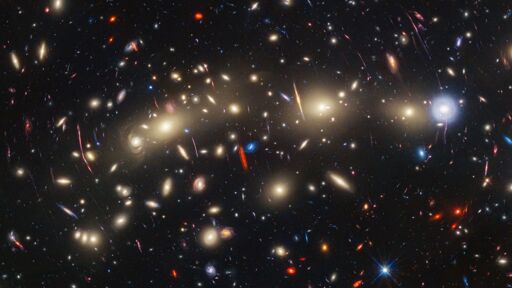
They told us the Sun was a star! If they’re lying to us about that, think what else they could be lying about.
The Sun is a star though? It’s not one you should look at with your bare eyes though, since it is relatively close to Earth. It’ll burn your eyeballs. Most other stars are many many light years (the distance that LIGHT travels in a year) away from Earth, so they look super tiny and don’t make night time bright like the Sun does during day time. Fun fact, many of the stars you see in the night sky aren’t actually stars, but entire galaxies! There’s also a bunch of binary star systems as well as triple star systems (trinary? ternary?), so when stars orbit around each other, the brightness changes. (e.g. if Star A and B orbit each other, and B is brighter than A, then when they orbit each other, you periodically see either star A or the brighter star B and, at a distance, it looks like one star that is varying in brightness, a variable star!)
If that’s true then why are they only just finding the first stars now? And what about the ones we can see at night? Something doesn’t add up here.
first stars as in the first ones that were made after the big bang, not the first stars as in first discovered.