Personally, I find that (complex) software implemented in Python tends to be so unreliable that I typically don’t want to use it after all, but I only find that out after wasting a bunch of time learning the software.
It’s just frustrating, especially if I come back to the software every so often, naively thinking that it’s been a few versions, so maybe they’ve fixed it. It’s always just different bugs, which still end up being too frustrating to use the software.
To give an example, I like to compose music using Lilypond, which is more-or-less a programming language to create sheet music. And there is a program that’s supposed to give you a well-integrated workflow for that (i.e. an IDE), called Frescobaldi.
The first time I tried it, playback of the composed music wouldn’t work.
The second time, I couldn’t click on notes to jump to the respective code snippet.
And I tried it again a few weeks ago and it just crashed immediately with an obscure error message.
Instead, I’ve slapped together a script, which just opens the sheet music in my PDF viewer, the code in my normal editor and then uses a CLI tools to generate and playback the sheet music. And while it’s definitely not perfect, it has been working more reliably for me than Frescobaldi ever has.
I’m going to go with the multiple causes for slowness (and that’s interpreted languages in general). In some cases, things might be usable if I weren’t on Zen+ still (newer stuff has better IPC among other things).
Things like JIT or no-GIL might reduce that, but I’m not sure that it’s that easy to fix (not being default (plus multiple options) seems to complicate bindings even).


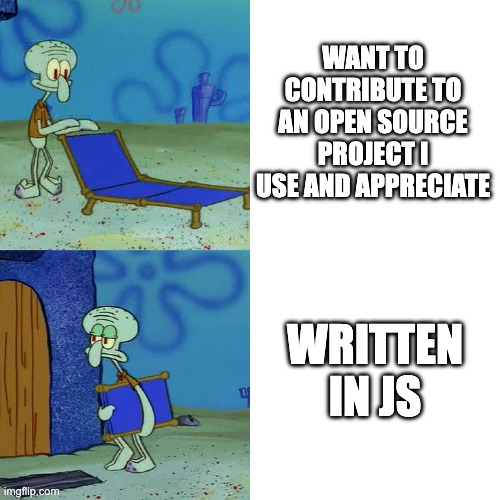
Feels the same whenever a project is written in python, but I uninstall it too.
why?
Same, so I’ll only answer for me: Python is dependency hell, also breaking existing code with every second update. Hard pass.
Python versioning is terrible
Still remembering python 3 release from 17 years ago?
They have breaking changes in their minor versions…
We are no longer in the Python 2 days. You have lots of wiggle room for using the version you want and are rarely forced to use specific releases.
I mean, flatpaks are great…
Solving problems you shouldn’t have?
You already have those problems, clearly.
Personally, I find that (complex) software implemented in Python tends to be so unreliable that I typically don’t want to use it after all, but I only find that out after wasting a bunch of time learning the software.
It’s just frustrating, especially if I come back to the software every so often, naively thinking that it’s been a few versions, so maybe they’ve fixed it. It’s always just different bugs, which still end up being too frustrating to use the software.
To give an example, I like to compose music using Lilypond, which is more-or-less a programming language to create sheet music. And there is a program that’s supposed to give you a well-integrated workflow for that (i.e. an IDE), called Frescobaldi.
The first time I tried it, playback of the composed music wouldn’t work.
The second time, I couldn’t click on notes to jump to the respective code snippet.
And I tried it again a few weeks ago and it just crashed immediately with an obscure error message.
Instead, I’ve slapped together a script, which just opens the sheet music in my PDF viewer, the code in my normal editor and then uses a CLI tools to generate and playback the sheet music. And while it’s definitely not perfect, it has been working more reliably for me than Frescobaldi ever has.
I’m going to go with the multiple causes for slowness (and that’s interpreted languages in general). In some cases, things might be usable if I weren’t on Zen+ still (newer stuff has better IPC among other things).
Things like JIT or no-GIL might reduce that, but I’m not sure that it’s that easy to fix (not being default (plus multiple options) seems to complicate bindings even).