Bicycle Colorado and Obvio, a technology company dedicated to curbing reckless driving, announced the alarming results of a driver behavior study in Colorado.
@ceenote@NomNom I agree with you that roadways need to be designed to curb bad driver behaviors. Not only that, we need less drivers and roadways overall.
However, don’t fall prey to them labeling this “AI”. Categorization has long been within the scope of Machine Learning which is a sub-discipline of AI; it isn’t AI in and of itself (https://scienceexchange.caltech.edu/topics/artificial-intelligence-research/artificial-intelligence-vs-machine-learning). Provided the cameras aren’t a surveillance net in disguise, a la Flock, and there are real people qualifying the results, I think it could be a net benefit. This reads to me as a system that can tell the difference between someone holding a phone or holding the steering wheel with both hands. There’s really nothing ominous about that. It’s essentially the same as identifying variations in handwriting and differentiating between an “a” and an “A” as written by different people. But, if the system also logs driver’s license plates and locations and stores them in a database then it becomes more problematic without data retention policies, access restrictions, human review, and other governance mechanisms.
There is potential for abuse everywhere, that’s why we have rules, regulations, and laws to prevent such behavior. I’m not an AI booster by any means, but I do think there are practical applications for technologies like this. The key is in rolling technology out in a thoughtful and responsible way. We can’t make an instantaneous jump to safer roadways, it takes time and this might be something we can do right now to help. This tech (at least as far as this article is concerned) helps illustrate the culture of apathy and entitlement today’s drivers exist within.
Calling it AI and saying it’s unbiased by the author and company are likely BS. My opinion is that AI is being used as a buzzword to make sales. I would also take this all with a grain of salt. The company should be under intense scrutiny and there is already a lot of precedent where these kinds of systems are being abused by police.
>if the system also logs driver’s license plates and locations and stores them in a database then it becomes more problematic without data retention policies, access restrictions, human review, and other governance mechanisms
That level of logging would be necessary to implement a lawful legal mechanism.
Data is retained forever and will be sold and stolen repeatedly.
Access restrictions and human review are antonyms.
Any governance mechanism based on surveillance will eventually be abused by the government, outsourced to and abused by a corporation, or both (see current events)

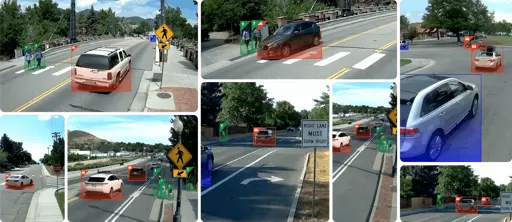
@ceenote @NomNom I agree with you that roadways need to be designed to curb bad driver behaviors. Not only that, we need less drivers and roadways overall.
However, don’t fall prey to them labeling this “AI”. Categorization has long been within the scope of Machine Learning which is a sub-discipline of AI; it isn’t AI in and of itself (https://scienceexchange.caltech.edu/topics/artificial-intelligence-research/artificial-intelligence-vs-machine-learning). Provided the cameras aren’t a surveillance net in disguise, a la Flock, and there are real people qualifying the results, I think it could be a net benefit. This reads to me as a system that can tell the difference between someone holding a phone or holding the steering wheel with both hands. There’s really nothing ominous about that. It’s essentially the same as identifying variations in handwriting and differentiating between an “a” and an “A” as written by different people. But, if the system also logs driver’s license plates and locations and stores them in a database then it becomes more problematic without data retention policies, access restrictions, human review, and other governance mechanisms.
There is potential for abuse everywhere, that’s why we have rules, regulations, and laws to prevent such behavior. I’m not an AI booster by any means, but I do think there are practical applications for technologies like this. The key is in rolling technology out in a thoughtful and responsible way. We can’t make an instantaneous jump to safer roadways, it takes time and this might be something we can do right now to help. This tech (at least as far as this article is concerned) helps illustrate the culture of apathy and entitlement today’s drivers exist within.
Calling it AI and saying it’s unbiased by the author and company are likely BS. My opinion is that AI is being used as a buzzword to make sales. I would also take this all with a grain of salt. The company should be under intense scrutiny and there is already a lot of precedent where these kinds of systems are being abused by police.
>if the system also logs driver’s license plates and locations and stores them in a database then it becomes more problematic without data retention policies, access restrictions, human review, and other governance mechanisms