I write a blog that focuses on public information, public health, and policy: https://pimento-mori.ghost.io/

  • 446 Posts
  • 1.27K Comments
Joined 5 months ago
cake
Cake day: June 24th, 2025

help-circle
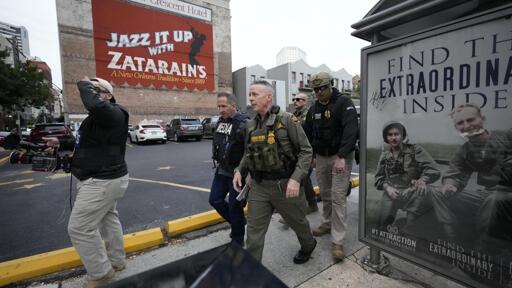
  • CNN also reported the case of a 22-year-old US-born mother who was chased home by federal agents in an SUV from the grocery store in Marrero. She told CNN: “I kept yelling at them, ‘I’m legal! I’m a US-born citizen! Please, leave me alone! I’m going home, my daughter is in the house. My baby is waiting for me!’”

    “They’re not picking up criminals,” said Taber. “They’re picking up people off the streets, whoever they can catch – these are moms and dads coming home from work, ambushed getting out of their cars.”

    The only thing that keeps coming to my mind when reading this is just how fucking disgusting this is.

    How the fuck can anyone just be ok with this? Brain washing? Dissociation? The false belief that even if everything collapses around them, maybe they’ll be ok as long as they keep their noses out of it?

    What is it that keeps people from acknowledging this is not fucking ok? If you won’t at least speak up, at what point will you accept your role as a collaborator?


  • Basic Glitch@sh.itjust.workstoADHD memes@lemmy.dbzer0.comI give up
    link
    fedilink
    English
    arrow-up
    2
    ·
    edit-2
    22 hours ago

    This is a great answer.

    •Speed as in processing/performance speed= From a normal person’s perspective, I can perform certain tasks at an annoyingly slow or bizarrely fast pace, but be completely oblivious the whole time.

    •Speed as in the drug= A party drug from a normal person’s perspective somehow alleviates my anxiety, turns the volume down on the constant bombardment and chaos of external stimuli, and allows me to focus on the most salient piece of incoming information so I don’t constantly feel like this:

    •Speed as in perception of an external object’s velocity=distance/time, for ADHD vs neurotypical brains is the only one I don’t really get off hand, but I am interested in understanding. It could be that once I hear an example it will click.


  • I know we’re supposed to believe that the killers who made this man into one of their own are also crying “why?,” but I don’t.

    They’re the answer to “why?”, “how?”, and “when?” in other countries, and when it happens, it’s usually not a tragic accident, it’s just a step in part of a bigger plan.

    If we’re supposed to accept that innocent human lives are collateral damage in the shadow wars fought abroad for the greater good, it seems pretty foolish to jump to the conclusion that Americans couldn’t wind up collateral damage in a shadow war being fought at home.

    But, then again, you also can’t prove what’s intentional vs incompetence when nobody in the shadows has to answer to the masses. The greatest number are simply incapable of understanding what’s best for them and for the greater good.


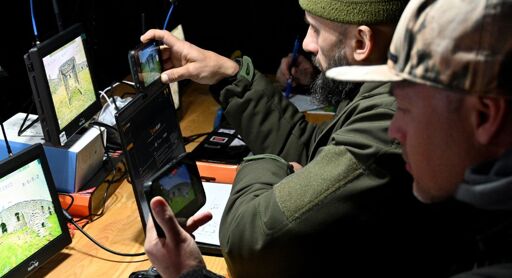
  • Ukraine’s defense relies increasingly on huge volumes of civilian data stored on cloud platforms. An adversary’s military may supply their targeting algorithm with an individual’s location, health, and online behavior. Military actors regularly mine, analyze, and repurpose social media posts.

    It is not clear, however, that the deep learning systems integral to some of these new weapons can overcome the fog of war. These systems treat all data as objective representations of reality, when in fact information drawn from social media platforms is shaped by users’ emotional and cognitive experiences in ways that can skew its utility for wartime intelligence. The “learned knowledge” generated by analytic systems is probabilistic, not causal—leading to the risk that algorithms are “enforc[ing] their version of ‘reality’ from patterns and probabilities derived from data.”

    These venture-backed firms view contemporary conflicts as live testing grounds.

    Global digital platforms such as TikTok and Telegram illustrate the wider environment in which these dependencies are forming. Though neither company develops military technologies, both shape the information environment surrounding war. TikTok’s recommendation algorithm influences how audiences perceive the conflict in Ukraine, shaping global narratives and public opinion. Yet its complex ownership structure, rooted in Chinese parent company ByteDance and entangled with global venture capital, has sparked geopolitical concern. … These concerns highlight how platforms created for civilian use can also become entangled in the political and informational dimensions of war.

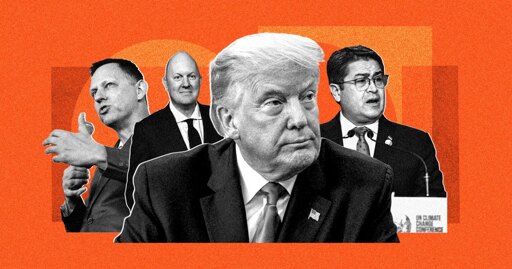
    The overlapping interests of finance capital and private technology corporations transcend national borders, creating forms of influence that do not fit neatly into binary friend-or-enemy distinctions. ByteDance’s global investment network, spanning Chinese state-linked entities, American private equity funds, and international investors, illustrates this transnational ownership model. It complicates national regulatory and security responses, as policymakers must ask not merely who owns a given platform, but who controls the data, infrastructure, and decisionmaking power that states increasingly depend on.

    This illustrates a deeper shift in the relationship between the market and the military. The problem is not that defense firms are publicly traded—Lockheed Martin and General Dynamics have been for decades—but that contemporary defense-tech companies retain proprietary control over data-driven systems central to military operations. Their technologies are not merely delivered to the state; the companies are embedded in the decisionmaking architecture of warfare. When a firm’s market value depends on its perceived wartime success, its incentives may diverge from those of the state it ostensibly serves. This intertwining of commercial strategy, military dependency, and investor confidence represents a new kind of vulnerability for states.

    What is at stake, beyond the conflict itself, is the nature of state sovereignty. The ability of states to govern, defend, and act independently is increasingly mediated by private technology firms and global finance. This is not entirely new. States have long relied on private contractors, but the kind of dependency has changed. Unlike traditional arms manufacturers, today’s defense-tech firms control the digital platforms, data flows, and algorithmic systems that underpin military decisionmaking. At the same time, civilian platforms like Telegram and TikTok shape the informational terrain of conflict, influencing how wars are perceived and fought.

    I just want to make sure I’m understanding this.

    •You have companies like Meta (just an example) working for both sides of a conflict via government contract, but not necessarily bound to either side of a conflict because of global venture capital/transnational ownership model

    •We know Facebook/Meta has been intentionally manipulating the emotions of social media users for over a decade now

    •That social media data is then collected and used to train military platforms, which may be directly or indirectly linked to the social media company

    •These companies very likely have an incentive to create an endless war (and endless profits for themselves) by manipulating the emotions and behavior of social media users, knowing that data will be used to train military platforms

    Basically, a private tech company could manipulate data to give one side of a conflict an advantage over the other, but it could also intentionally pit adversaries against each other in an endless loop by manipulating social media content, and by extension, manipulating the military platforms being trained.

    A company could potentially profit from both sides of a conflict it’s manipulating because the states have turned to it and other big tech companies to help them reach “victory” in the endless conflict the company helped create. Correct?


  • There’s a few ways this could play out, so it seems to depend on whether or not we’re really “at war.”

    Trump administration says we are (except he’s the president of peace so that doesn’t make much sense).

    Most experts seem to say we’re not at war, so that contradicts the Trump administration.

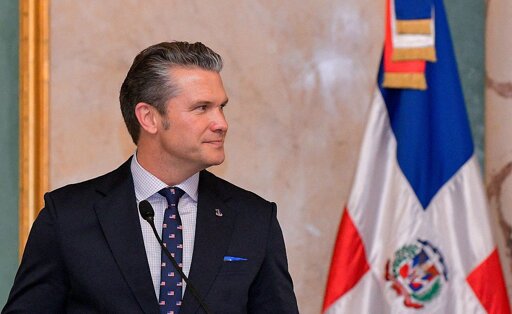
    So it would seem that solving this riddle will determine who is actually held responsible. Is it Hegseth for giving the illegal orders or is it the people that carried out the illegal orders for him?

    I think morally both would be responsible. But legally, it’s going to take somebody clearing up whether or not this actually counts as a war.


  • "I don’t know anything about it. He said he did not say that, and I believe him, 100 percent,” Trump said aboard Air Force One. Asked whether he would have agreed with the order if Hegseth had given it, Trump replied: “He said he didn’t do it, so I don’t have to make that decision.”

    He said he didn’t do it. If it turns out he lied, then I’m just as innocent as the innocent people he murdered.

    “If orders are illegal, not only do they not have to follow them, they are legally required not to follow them,” Kelly told Welker.

    Ohhh watch out Kelly. Freedom facts mean even astronauts can’t encourage American soldiers not to break the law.