You must log in or # to comment.
Everytime someone ask AI for wiring diagram, Medhi’s mom will go slap them with a slipper.

It’s almost as though an AI designed to make pictures of kittens with boobs has no understanding of how electricity works.
DO NOT TRUST ANY AI TECHNICAL DRAWING!
It was legit a little scary how long I stared at this diagram in utter bewilderment.
It’s 2025 and the tech bros have made it where I can’t believe my own lying eyes.
What the actual fuck. The prongs aren’t even oriented correctly. And the ‘live’ wire is just tied to ground.
So glad we’re burning down the rainforests for this.
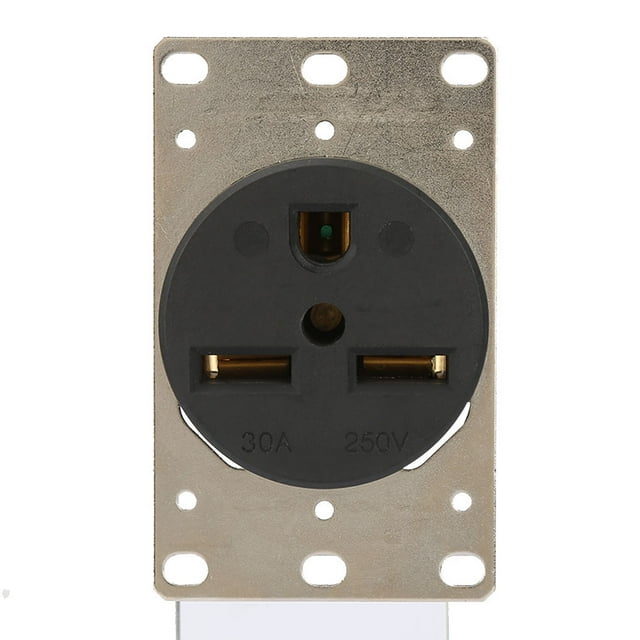
I was curious and found we do actually have plugs with those pin orientations.
It’s 240v though, which means two live wires on opposing phases shorted together and connected to the appliances ground wire… Even better.
I plug in my arc-welder.
I exit existence.
No no no, you just get assigned to the great omni pattern buffer, may O’Brien find and rematerialize you as soon as he is able =P
Instructions unclear, Baron Samedi rematerialized me. Does this mean I gotta go shock myself stupid again until O’Brien does it?
… Do you know… what year you are in?
2025; sorry, old personal story from 2019. Just a funny NDE I had once. Have a good day!
Ah I was trying to keep going with pop culture jokes and was suggesting you may have been Twin Peaks Season 3 zapped into an alternate timeline, where maybe it was back when… was it The Living Daylights?
Whenever it was when whichever Bond movie had Samedi as the big bad came out.
=P
Nah, don’t you have a RCD in your home?
Not very common in North America.
We’re required to have them (called GFCI here) near water; bathrooms, kitchens, that sort of thing, but I haven’t seen many installed in panels protecting entire homes/shops or protecting banks of several circuits. I don’t think I’ve ever seen one on larger wattage items like clothes dryers or large shop tools either.
It’s actually required by code in almost every place in homes now for new construction.
Unless that changed within the last 5ish years; not they aren’t. But this is nuance that varies region to region; North America doesn’t have one single unified electrical code, though most of it is more or less the same.
I’m in a new (rental) home, built roughly 6years ago; the only places I have GFCI is bathrooms and kitchen. (and I believe the outdoor outlet too, but not certain without checking)
Bedrooms and the living room have AFCI breakers, but that’s not for protection against shocks. (and no, they’re not dual purpose breakers).
https://www.legrand.us/ideas/blogs/gfci-outlet-requirements
Tldr:
Where are GFCI Outlets Required? Generally installed in areas near water or potential moisture, GFCI outlets are commonly used in kitchens, bathrooms, laundry rooms, garages, unfinished basements, or outdoor spaces, as required by the NEC.
CAFI breakers are required for new builds, which replaced the function of GFCI outlets and also adds arc fault protection.
Not all districts are using the latest version of the NEC, so some regions may not require it yet.
The NEC ground fault protection covers basically every outlet and appliance now except living rooms and bedrooms. Garages, kitchens, bathrooms, exterior outlets, AC units, crawl spaces, accessory buildings…you name it. Pretty much 70% of your home’s electrical has to be ground fault protected now in new builds.
All outlets pretty much everywhere require arc fault protection now, including bedrooms, living rooms, and everywhere ground fault is required.
Gemini wired my home.
Removed by mod
This is a plug, not an outlet; and it shorts the live + neutral pins together. There is no ground pin present, though a wire labeled ground is also being shorted to the live+neutral pins. (basing ‘pins’ on shape/colour and ignoring that at least one is in the wrong position)
If this doesn’t immediately trip the breaker when plugged in, it’s because you have an open neutral; and now whatever’s on the end of that ground wire (typically exposed metal) is live.
The live and neutral pins are wired together, so there’s not really a reason for the power to travel to that ground wire. Unless the path to the ground of the device, and then from there to actual ground, is shorter, then nothing will flow that way. It’s absolutely not safe, but a number of other factors would need to be present before it were deadly.
Unless the path to the ground of the device, and then from there to actual ground, is shorter, then nothing will flow that way.
That’s not true. Electricity will take all available paths to return to ground, with current flow relative to the resistance present. In other words, two low resistance paths will share similar amounts of current when both are connected to power.
If you were touching anything connected to that ‘ground’ wire while also connected to a true ground yourself; you could receive a harmful shock from plugging this in, even with a breaker in-line and successfully tripping. A GFCI device should prevent that shock, but a regular breaker will not trip fast enough.
True actually. If this were the plug for a washing machine, and you were touching it and the tap for the water inlet, you would definitely get shocked still. Edit: The washing machine itself also wouldn’t generally have a connection to ground that way, as they usually use plastic hoses.
deleted by creator
I wouldn’t say connecting the ground wire of an appliance to the hot side of an outlet is very safe.
Removed by mod
This question has already been answered many times over in the comments.
Removed by mod
https://sh.itjust.works/comment/21237626
I already have.
Why are people up voting this? You’re talking utter nonsense in multiple ways.
Removed by mod
First, both ‘neutral’ and ‘ground’ are leaving that plug.
Second, that ‘ground’ wire is connected to both live and neutral, with no actual ground connection present. The other end of that wire is presumably connected to the exposed metal of the appliance this plug would be powering. Just calling a wire ‘ground’ doesn’t make it ground nor safe; it has to actually be electrically connected to a grounded point.
Removed by mod
The ground wire is connected to ground, per the diagram.
The ground wire in the diagram is not connected to your house’s grounding device. It is connected to the ground of the appliance, which has no such connection to the actual, physical ground.
There’s a terrifying number of confident morons in this thread that have no business touching anything electrical.
Just like AI itself. The blind leading the blind. Into electrocution and/or a house fire.
No, the ground wire is connected to the metal casing of the appliance. It’s typically connected to ground via the plug.
This is how people die.
Removed by mod
Because it’s a diagram of how to wire a plug, not a power cable.
This is like expecting a diagram of an intersection to also have a road map of the entire area.
Also, as others have pointed out, that’s assuming the neutral isn’t broken.
The earth wire typically is connected to the metal casing of the appliance, and the earth pin of the plug. This is a critical safety feature, which will cause the circuit protection to trip in the event of phase touching the metal of an appliance.
Connecting phase directly to the metal is an excellent way to kill someone.
wire an outlet
It says plug in the title.
I was gonna write the same. This is completely dumb but at least it’s safe.
Connecting the earth wire, which goes to the metal casing of the appliance, directly to phase definitely isn’t safe.
And where does phase go to or come from? The picture shows a short of piece of wire labelled “phase” but that doesn’t magically make an otherwise unconnected piece of wire anything active. If labelling anything “phase” could produce energy, boy would my energy bill go down fast 😂
I keep to my statement: The pic shows a completely dead “circuit”.
This is a plug, which you plug into a socket, which is where the leccy comes from.
Of course the circuit is dead, it’s not plugged in.
This picture doesn’t show how to wire socket, but now to wire a plug. The wire that’s labeled ground is actually attached to live connector, although I guess that doesn’t matter as live and neutral are shorted by white wire.
Removed by mod
For reference / non electrical engineers / visual learners:
https://engineerfix.com/electrical/plugs/how-to-wire-a-us-plug/
NA 2 Prong, Type A

NA 3 Prong, Type B

‘Earth’ = Ground = the 3rd, round prong
You can maybe see the AI has kinda sorta merged elements from both of these.
The main problem is that uh… notice how in these real diagrams none of the lines are looped into each other, they are 2 or 3 distinct lines that feed into whatever is being plugged in…
… whereas in the AI diagram… it just forms a continuous loop.
Which… basically means that what the AI labels as ‘neutral’ and ‘ground’… aren’t.
Doing that would instantly cause a short cicruit and potentially immediately start a or multiple fires, trip circuit breakers, etc, depending on the voltage/amperage avalaible to the outlet this AI ‘death-plug’ ie connected to, and how long it takes the circuit breaker to trip.
… thats my layman understanding, corrections from any actual EEs would be appreciated if I’ve mucked something up.
Just a heads up, those diagrams are also insufficient on their own. They don’t indicate which line goes to the wide blade and which goes to the narrow blade on the plug. Getting that backwards on some devices can cause switching and fusing to be on the wrong line and defeat certain circuit and safety protections.
Much as I encourage people to fix their own things, wiring AC mains connections is one of those “if you have to ask, you probably shouldn’t” kind of things.
Thank you, those are very good points to add!
I managed to be busy nearly all day, glad other people have upvoted your addendum.
This won’t kill anybody. It’s not wired to anything but a ground wire.
Maybe the point is rather “It generates random bullshit diagrams and if you rely on them, things will go wrong”. This one might not be lethal, but some other design it produces might.
100%. I was just talking about this one image not AI in general.
I asked llms to help me with world building projects and to make some artwork (technical drawings) and boy howdy did they fail…
Neutral is also wired to live. Isn’t that a short circuit?
The neutral is hot but it’s also grounded, electricity should take the path to the ground instead of doing anything meaningful on the neutral. You could probably measure a bit of current but not 220.
deleted by creator
This isn’t the outlet, it’s the plug that goes into the outlet. Presuming you had it would fit into (the plugs are oriented wrong), it would be about as safe as shoving a fork in instead.
I understand what it is. But any normal GFCI would trip before it could cause any harm to anything. Even a normal breaker would trip before it created a problem, well other than sparks and likely fire. Since this is covered unlike a bare fork it is moderately safer and would not allow current through the body.
It’s irrelevant though as the image is just stupid. If you can’t immediately see that you should never be allowed near anything electrical.
And there actually is a plug that is oriented like that. It’s a Nema 6-15. And the great thing about it is it’s a 220v 15amp connector. And the plug would also fit in a Nema6-20 which is 20amps. So even more deadly.
The next diagram it hallucinates may be lethal though.
That ground wire goes directly to the metal casing of the appliance.
For people enjoying LLMs being shit at everything, the Vagina Museum has a whole series of them failing at making pictures about pregnancy:
https://masto.ai/@vagina_museum
I think this was the first one:
Unrelated question, why is this post a full fucking screenshot of some dude’s phone uncropped?
Cropping is a lost art that was under appreciated in its time. Oddly, I see it done less even though it’s become substantially easier to do over time, with the tools often built into whatever took the screenshot.
This is fucking fantastic.
Just as a PSA, black wire to brass screw, white wire to silver screw, bare or green wire to screw on rounded prong. Also, black wire is hot, white is neutral, green is ground.
In the US*
As another PSA, if you reply on comments like this to go about wiring anything electrical, do yourself a favor and call a professional.
I mean, replacing a plug on a cord is like a basic human thing that most people should be able to do. A one minute video will show you how.
If you can’t figure out how to change out a plug, you probably can’t adult.
deleted by creator
Adult checking in here. I’ve never had to replace a plug for anything… can’t say I know how to either.
If the only thing wrong with your appliance is a damaged cord, which usually happens near where it’s plugged into the wall, and it is a three-pronged cord, the information above is sufficient to replace the plug. Note that you will need to be able to identify the three wires and the color they represent, which is usually followed in decent power cords (of course, not all of them are decent).
Absolutely, if you aren’t confident in your knowledge and don’t have someone who can verify your work, don’t do it. It’s cheaper to throw away any given appliance than it is to throw away your home via an electrical fire. But basic AC electricity isn’t that complicated, even if it’s more complicated than basic DC electricity.
Except when white is hot for odd light switch layouts. (Which should be wrapped in black tape, but you know Shady DYI or I Know a Guy electricians.)
I mean what the fuck am I even seeing?
and also, spicy ground.
Honestly doesn’t look particularly dangerous. I think this nets you a ground neutral connection with two test points?
Would it be useful? Absolutely not. Dangerous? p Probably not.
I get that it’s a bad idea to trust AI to something so important. And that it’s probably going to shock or kill you.
But since I’m not an electrician, ELI5. What’s wrong with this diagram?
In addition to what the other person said, there’s a wire here connecting the two prongs together. This is a short circuit and would at least blow a breaker and at worst start a fire.
This picture is so frustrating. There’s no apparent source for the “live” wire. But if you tried following this with your real wiring (white, black and green do exist), you would be connecting your hot, neutral and ground lines all together. I doubt it would kill you at 120 V but it would definitely trip your breaker the moment you plug it in, and almost certainly make some nice big arcs.
Its ok, the AI predicted this and oriented the prongs incorrectly so there is no chance to accidentally plug it into an outlet.
The outlet has three wires (black, white, and green), and the device to be plugged in has three wires (black, white, and green). The whole point of the plug is to connect each color wire to its counterpart, and only to its counterpart.
This diagram is the same as sticking a fork in all 3 holes on an outlet.
You will trip a breaker or 2. But you won’t die. This is an exaggeration. Nevermind it wouldn’t even fit a plug? If I ask it to do the same, it creates the following schematic.
https://g.co/gemini/share/0e1d197c002b
Not saying you should use any LLM to create something critical.
That’s a text response, this post is about image generation. Gemini is okay at finding stuff on google to show you, it’s basically like a ‘Let me Google that for you’ machine. The problem is when you ask it to make something new.
Behold, the image response I got using your prompt:

You’re in trouble if you also have a broken neutral somewhere.
But yes, the most likely outcome is breaker goes pop.
color-coded screws? wtf
For what it’s worth, the terminal screws on US outlets and replacement plugs usually actually are color coded. The screws for the hot (black) wire are gold or brass, and the screws for the neutral (white) wire have a silver finish. The ground screws are usually anodized green.
You’ll actually find green colored ground screws in tons of devices, not just outlets and plugs.
wouldn’t that add resistance to ground path (avoidably)
What resistance? The screw itself is not intended to carry any current. It just keeps the ground ring or whatever it is in contact with the terminal or the chassis of the device in question.
Doesn’t this just bond neutral to ground? It’s definitely illegal and will kill you if some other device has a short and makes ground hot, but at least it’s not a suicide cord
this shorts live and neutral, ground pin is not even present (different shape) otoh if you need help wiring a plug, you probably shouldn’t
There’s no ground pin, but there’s no hot wire.
This is a plug. The big pins are live + neutral, which are shorted together and connected to the wire labeled ground (which heads to the exposed metal of whatever appliance is on the end of this cable).
Yes there is, the earth is connected directly to phase.
Removed by mod
It would put phase directly on the metal casing of the appliance, if the circuit protection didn’t work.
Please avoid the temptation to comment on something you know nothing about, this is actually a serious safety concern if someone followed this diagram.
Even worse. Orientation of pins like this is used in 240V circuit which means it has two antiphase live wires. This means that after shorting them, if one trips but not the other (if these two have independent breakers - idk if code requires otherwise) 120V is sent to device ground, and this one can be cut off by GFCI if used, but i hear it’s uncommon
If it was normal 120V circuit, breaker would cut off live and left neutral connected to device ground, which still can be some 20V depending on conditions
Ooh, I hadn’t even thought about voltage being backfed through the neutral.
Have you heard of something called a floating neutral? That could cause some issues.
Yea, but at this point multiple things are seriously wrong
hot wire is in the socket, assuming it was wired correctly
JUST. WHY. There are so so many freely available photos already online that don’t need to be generated AGAIN
With deeper integration of AI into search machines, such as Google, the distinction between AI generated and real search results becomes more and more complicated.
But those images are hosted by companies other than Google. You might visit those sites instead of staying on a Google-owned domain where they can keep making money off of you.